
Skip to content

Nationwide · Licensed electricians in 47 states + DC

Brightlane Electric

Home Rewiring · Connecticut

Home Rewiring in Connecticut

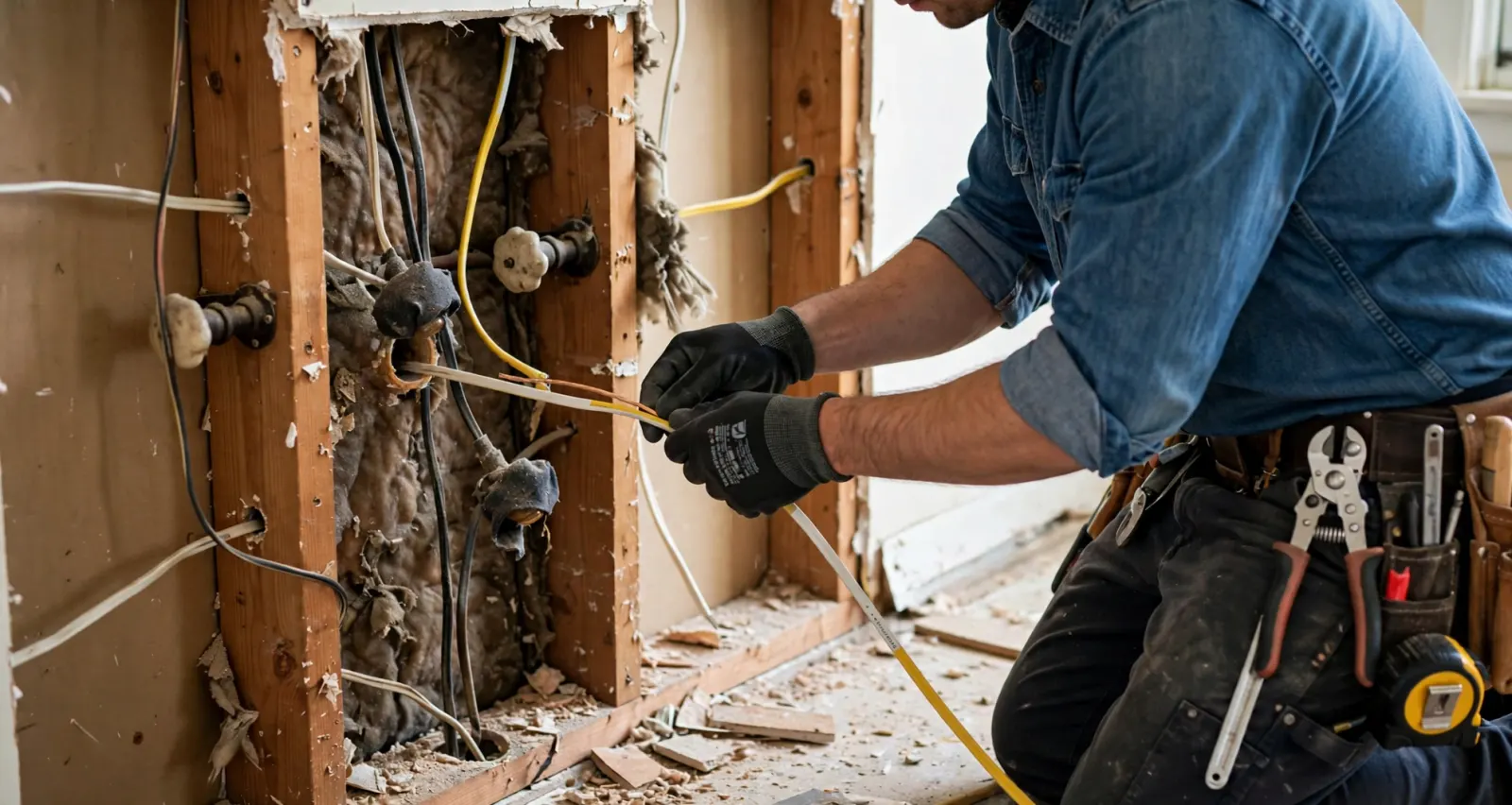
Rewiring replaces old branch-circuit wiring, such as knob-and-tube, ungrounded cloth-insulated cable or 1960s–70s aluminum branch wiring, with modern grounded copper cable. It can be done room by room, and an electrician will tell you which circuits matter most.

  • Call now to check electrician availability in your area
  • Independent, licensed electricians
  • Local guides for 2 Connecticut cities

Home Rewiring in Connecticut: what changes city to city

Older housing stock and nor'easter outages make rewiring, panel replacement and generator transfer switches frequent projects.

Across the Northeast, homes deal with cold winters, nor'easters and ice storms. Permit offices, utilities and housing stock differ by city, which affects how home rewiring is planned and scheduled. These local guides cover the Connecticut cities where we have written specific notes.

Local guides in Connecticut

Home Rewiring in Hartford, CT

Hartford's three- and six-family houses in Frog Hollow, Parkville and the South End, and the Victorians of the West End, were mostly built before 1930, and knob-and-tube or cloth-insulated wiring is common. Rewiring is usually done during renovations, before insulation is added, or when an insurer asks.

Utility: Eversource

Home Rewiring in New Haven, CT

East Rock, Wooster Square and Prospect Hill have Victorian and early-1900s homes, and many New Haven two- and three-family houses date from the same era, with knob-and-tube or cloth wiring still in place. Rewiring is usually done during renovations, before insulating or when an insurer asks.

Utility: United Illuminating (UI)

Signs it's time to call

  • Knob-and-tube or cloth-insulated wiring
  • Two-prong outlets throughout
  • Aluminum branch wiring
  • Frequent tripping or warm devices
  • An insurer or home inspector flagged the wiring

How the job usually goes

  1. 1. Assessment

    Wiring type, condition and circuit layout are documented.

  2. 2. Plan and permit

    Circuits are prioritized and the work is permitted.

  3. 3. Rewire

    New cable is fished through walls and ceilings with minimal openings.

  4. 4. Inspection and patching

    Rough-in and final inspections, then wall openings are closed.

What moves the price

Electricians set their own prices; local permit fees and utility requirements add to these factors.

  • Home size and number of circuits
  • Access through attic, basement or crawl space
  • Plaster versus drywall
  • Whether the panel is upgraded at the same time
  • Patching and painting scope

Home Rewiring in Connecticut: questions

Who issues permits for home rewiring in Connecticut?

Permits come from the city or county where the home is. For example: Hartford: Electrical permits in Hartford come from the city's Licenses and Inspections division; West Hartford and other towns issue their own. New Haven: Electrical permits in New Haven come from the city's building department; surrounding towns issue their own.

Which utilities are involved in Connecticut?

Hartford: Eversource. New Haven: United Illuminating (UI).

Do I have to rewire the whole house at once?

No. Many homeowners rewire in phases, starting with kitchens, baths and bedrooms.

Is aluminum wiring dangerous?

Aluminum branch wiring can overheat at connections. Approved repairs (such as rated connectors) or replacement reduce the risk; an electrician can advise which fits.

More electrical help in Connecticut

Home Rewiring in other states

Need home rewiring in Connecticut?

Call now, or send a request and a licensed electrician who serves your ZIP code will contact you.

Call nowRequest service