Repair & troubleshooting
Emergency electrician
Call an electrician right away if you smell burning plastic, see sparks or scorch marks, hear buzzing from a panel or outlet, or lose power to part of the house with no tripped breaker. If there is smoke or flame, leave and call 911 first.
- Call now to check electrician availability in your area
- Licensed, independent electricians
- 47 states + DC
About emergency electrician
Most electrical emergencies start small: a warm switch plate, a breaker that trips again the moment you reset it, an outlet that has turned brown around the slots. These are signs that a connection is overheating, and heat at a loose or damaged connection is how most electrical fires start.
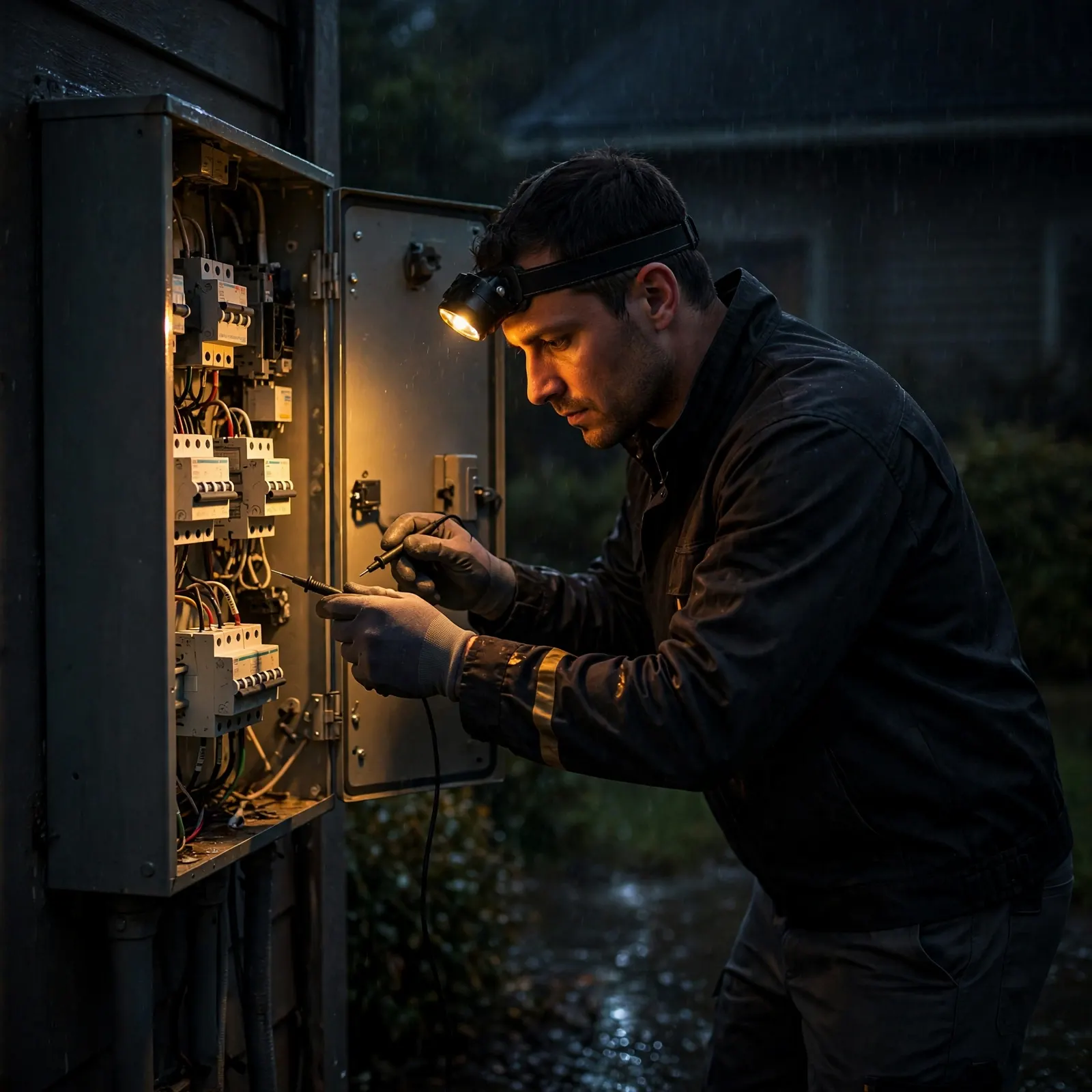
An emergency call puts a licensed electrician on the problem the same day when one is available. The first job is to make the circuit safe, usually by isolating it at the panel, then to find the failed device, connection or wire and repair it properly.
- Emergency Electrician at a glance
- Repair & troubleshooting
- Who does the work
- An independent licensed electrician
- Urgent calls
- Yes, call for same-day help when available
- Typical first step
- Make it safe
Signs you need this
- Burning or hot-plastic smell near an outlet, switch, fixture or the panel
- Sparks, arcing sounds or scorch marks on a cover plate
- A breaker that trips again immediately after reset
- Half the house dark or lights dimming hard when an appliance starts
- Water near the panel, outlets or wiring after a leak or flood
What the electrician does
- 1
Make it safe
The electrician isolates the affected circuit or shuts off the main if needed, then checks for heat damage.
- 2
Find the fault
Testing at the panel, the circuit and the devices narrows down whether the problem is a breaker, a connection, a device or the wire itself.
- 3
Repair or make temporary
Simple failures are fixed on the spot. Bigger repairs are made safe and quoted, so you are not left without power you can safely use.
What affects the cost
Electricians set their own prices. These are the factors that move a quote up or down, so you can compare like for like.
- Time of day and whether the call is after hours
- How long it takes to trace the fault
- Parts needed (breakers, devices, wire, a meter base or service parts)
- Whether the utility must disconnect or reconnect service
- Damage that must be repaired before power can be restored
What you can do safely, and when to stop
Safe to do
- ✓ Shut off the breaker for the affected circuit if you can reach the panel safely and dry
- ✓ Unplug appliances on a circuit that keeps tripping
- ✓ Call your utility if the outage is the whole house or a line is down outside
Stop and call
- ✕ Do not reset a breaker more than once
- ✕ Do not touch the panel if it is wet, hot or buzzing
- ✕ Stay 30+ feet from any downed line and call the utility and 911
Key terms
- Short circuit
- An unintended low-resistance path between conductors that causes a sudden surge of current and usually trips the breaker.
- Arcing
- Electricity jumping across a gap in a loose or damaged connection; it produces heat and is a common cause of electrical fires.
- Service drop
- The overhead wires running from the utility pole to the house, usually owned by the utility.
Emergency Electrician FAQ
Is a burning smell from an outlet an emergency?
Yes. Turn off that circuit at the panel, unplug what you can safely reach and call an electrician. A burning smell usually means a connection is overheating.
Should I call the utility or an electrician?
Call the utility if the whole neighborhood is out, a line is down, or the meter is damaged. Call an electrician when the problem is inside the house or at your panel.
Can I keep using power while I wait?
Keep using circuits that work normally. Leave the problem circuit off until an electrician has checked it.
What counts as an electrical emergency?
A burning or hot-plastic smell, smoke or sparks from an outlet or panel, a buzzing or crackling panel, a warm wall plate, water touching wiring, a downed service drop, or loss of power to part of the home with no tripped breaker. If there is smoke or flame, leave and call 911 first.
What should I do while I wait for the electrician?
If it is safe to reach the panel with dry hands while standing on a dry surface, switch off the affected circuit or the main breaker. Unplug nearby devices, keep people and pets away, and do not open the panel cover or touch damaged wiring.
Can an emergency electrician come at night or on a weekend?
Availability depends on the independent electricians who cover your ZIP code. Call and describe the problem; if no one can come right away, make the area safe by shutting off the circuit and keeping people clear until they can.
Can a tripped breaker be an emergency?
A breaker that trips once after a heavy load usually is not. A breaker that trips again immediately after reset, feels hot, or trips with a burning smell can signal a short or a failing connection and should be checked promptly.
Is a flickering light an emergency?
Flicker in one fixture is usually a bulb or switch issue. Flicker across several rooms, especially when large appliances start, can point to a loose neutral or service connection, which can damage electronics and should be checked the same day.
What information helps an emergency electrician most?
What you saw, smelled or heard, which rooms or circuits are affected, whether a breaker tripped, the approximate age of the home, and whether there has been recent storm, water or renovation work.
Where electricians offer this
Available through our network in 47 states and DC. Metro guides:
Related services
Electrical Repair & Troubleshooting
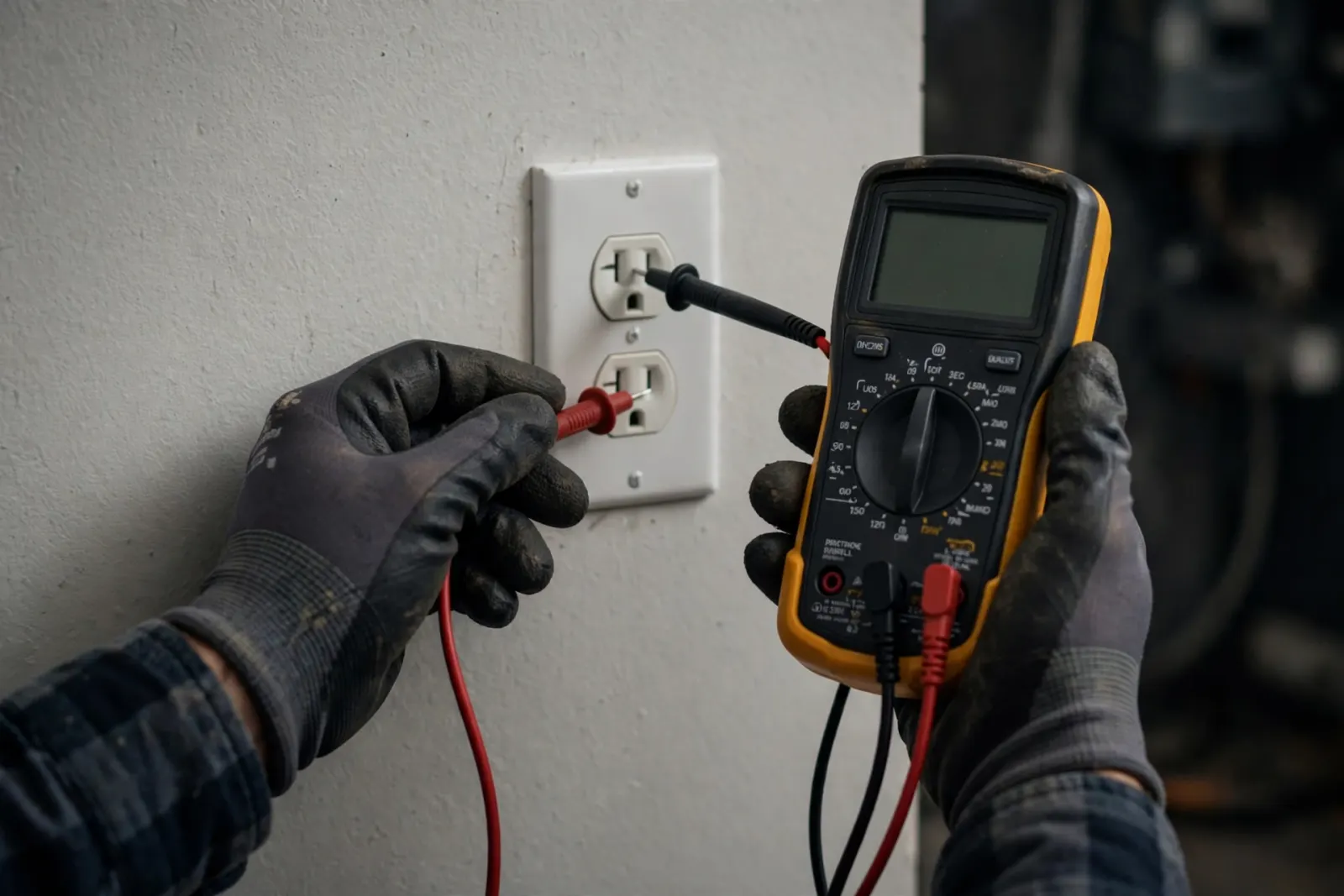
Dead outlets, flickering lights and tripping breakers usually come from a loose connection, a failed device, an overloaded circuit or a tripped GFCI somewhere upstream.
Learn more →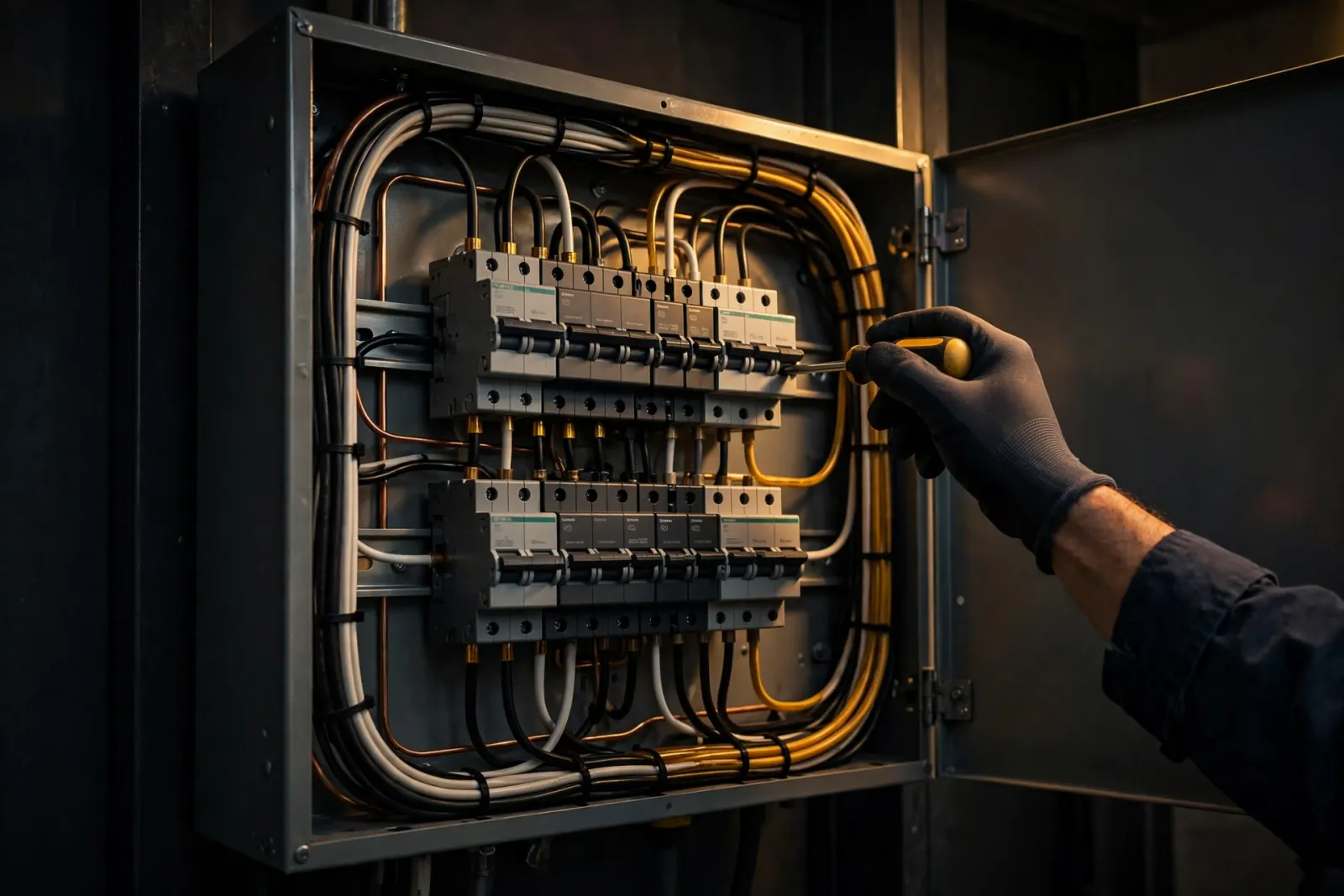
Electrical Panel Upgrade
A panel upgrade replaces your breaker panel, and often the service entrance, so the home can safely carry more load: an EV charger, heat pump, induction range or addition.
Learn more →
Whole-Home Surge Protection
A whole-home surge protective device (SPD) mounts at the panel and limits voltage spikes before they reach your circuits.
Learn more →Need help with emergency electrician?
Call now, or send a request and a licensed electrician who serves your ZIP code will contact you.