
Skip to content

Nationwide · Licensed electricians in 48 states + DC

Brightlane Electric

Ceiling Fan Installation · Florida

Ceiling Fan Installation in Florida

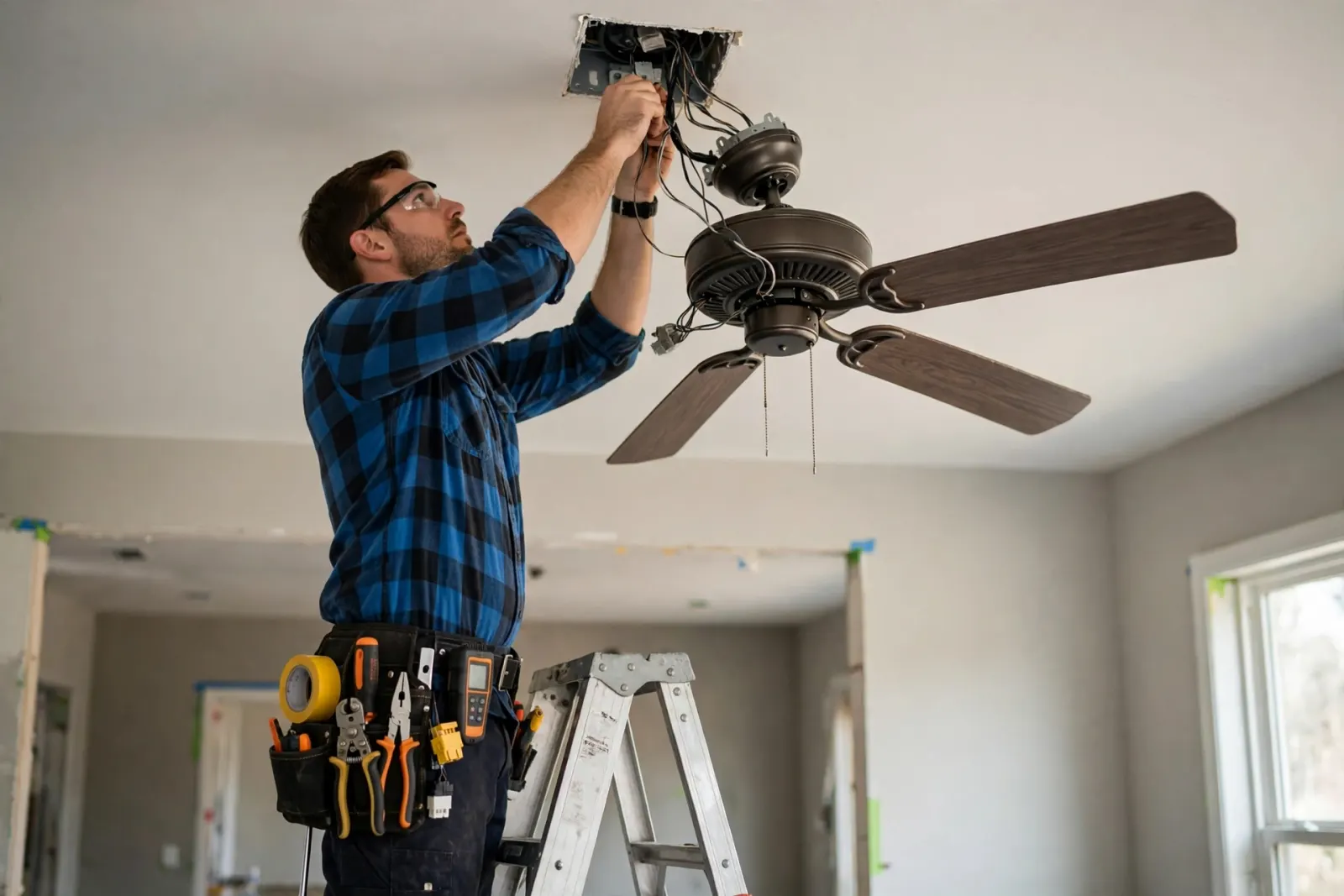
A ceiling fan must hang from a fan-rated box fastened to the framing, not a standard light box. Replacing a light with a fan is often a short job; adding separate switches for the fan and light may need an extra conductor.

  • Call now to check electrician availability in your area
  • Independent, licensed electricians
  • Local guides for 10 Florida cities

Ceiling Fan Installation in Florida: what changes city to city

Florida has some of the highest lightning activity in the country, and hurricane season makes surge protection and generators routine.

Across the Southeast, homes deal with heat, humidity, frequent thunderstorms and hurricane season near the coast. Permit offices, utilities and housing stock differ by city, which affects how ceiling fan installation is planned and scheduled. These local guides cover the Florida cities where we have written specific notes.

Local guides in Florida

Ceiling Fan Installation in Miami, FL

Miami's heat and humidity last most of the year, and ceiling fans are standard in many homes, from mid-century houses to condos with balconies. Outdoor fans on patios and balconies must be rated for wet locations and should resist salt-air corrosion near the bay and ocean.

Utility: Florida Power & Light (FPL)

Ceiling Fan Installation in Jacksonville, FL

Riverside and Avondale bungalows often have tall ceilings, where a downrod of the right length keeps a fan at a safe and useful height, while screened lanais in newer Southside and Mandarin homes call for fans listed for damp locations. Near Jacksonville Beach and Atlantic Beach, stainless or coated hardware lasts longer against salt air.

Utility: JEA (city-owned)

Ceiling Fan Installation in Pensacola, FL

Pensacola's heat and humidity last most of the year, and ceiling fans are standard in homes from North Hill bungalows with tall ceilings to newer houses with screened porches. Outdoor fans on porches and lanais must be rated for wet locations, and hardware near the bay and Pensacola Beach should resist salt-air corrosion.

Utility: Florida Power & Light (FPL, formerly Gulf Power)

Ceiling Fan Installation in Fort Lauderdale, FL

Fort Lauderdale's heat and humidity last most of the year, and ceiling fans are standard in homes and on patios along the canals. Outdoor fans must be rated for wet locations and should resist salt-air corrosion.

Utility: Florida Power & Light (FPL)

Ceiling Fan Installation in Saint Petersburg, FL

St. Petersburg's warm, humid climate makes ceiling fans standard in homes from Old Northeast bungalows to mid-century houses with Florida rooms and screened lanais. Outdoor fans must be rated for wet locations, and hardware near Tampa Bay and the Gulf beaches should resist salt-air corrosion.

Utility: Duke Energy Florida

Ceiling Fan Installation in Tallahassee, FL

Tallahassee's long, humid summers make ceiling fans standard in many homes, from mid-century ranches in Myers Park to student rentals near FSU and FAMU. Screened porches under the tree canopy often get outdoor fans, which need damp or wet location ratings.

Utility: City of Tallahassee Utilities (some outlying areas: Talquin Electric Cooperative)

Ceiling Fan Installation in West Palm Beach, FL

West Palm Beach's heat and humidity last most of the year, and ceiling fans are standard in homes from 1920s Mediterranean Revival houses with tall ceilings to mid-century homes with Florida rooms. Outdoor fans on loggias and patios must be rated for wet locations and resist salt-air corrosion.

Utility: Florida Power & Light (FPL)

Ceiling Fan Installation in Fort Myers, FL

Fort Myers' heat and humidity last most of the year, and ceiling fans are standard in homes from Dean Park bungalows to newer houses with lanais and screened pools. Outdoor fans must be rated for wet locations and resist salt-air corrosion near the river and the beaches.

Utility: Florida Power & Light (FPL)

Ceiling Fan Installation in Sarasota, FL

Sarasota's long, humid summers make ceiling fans standard in homes from Laurel Park bungalows to mid-century modern houses with lanais and screened pools. Outdoor fans must be rated for wet locations, and hardware on Siesta Key and Lido Key should resist salt-air corrosion.

Utility: Florida Power & Light (FPL)

Ceiling Fan Installation in Naples, FL

Naples' warm climate makes ceiling fans standard on lanais, covered patios and in living rooms with tall ceilings. Outdoor fans must be rated for wet locations and built to resist salt-air corrosion near the Gulf and the bay.

Utility: Florida Power & Light (FPL)

Signs it's time to call

  • Replacing a light with a fan
  • A fan that wobbles or hums
  • Wanting separate fan and light switches
  • Installing a fan on a vaulted ceiling

How the job usually goes

  1. 1. Check the box

    The box is checked for a fan rating; a brace is installed if needed.

  2. 2. Mount and wire

    The fan is assembled, mounted and balanced.

  3. 3. Controls

    Wall controls or remote are set up and tested.

What moves the price

Electricians set their own prices; local permit fees and utility requirements add to these factors.

  • Whether a fan brace is needed
  • Ceiling height
  • New wiring for separate switches
  • Number of fans

Ceiling Fan Installation in Florida: questions

Who issues permits for ceiling fan installation in Florida?

Permits come from the city or county where the home is. For example: Miami: Permits come from the City of Miami or, in unincorporated areas, Miami-Dade County; other cities in the county have their own building departments. Jacksonville: Jacksonville and Duval County share a consolidated government, and electrical permits come from the City of Jacksonville's Building Inspection Division. Pensacola: Inside city limits, electrical permits come from the City of Pensacola's inspection services; unincorporated Escambia County has its own. Fort Lauderdale: Electrical permits in Fort Lauderdale come from the city's Development Services Department; other Broward cities have their own. Saint Petersburg: Electrical permits in St. Petersburg come from the city's building and permitting office; other Pinellas County cities and unincorporated areas have their own. Tallahassee: Electrical permits inside the city come from the City of Tallahassee's growth management department; unincorporated Leon County has its own. West Palm Beach: Electrical permits inside city limits come from the City of West Palm Beach's development services; Palm Beach County handles unincorporated areas. Fort Myers: Electrical permits inside city limits come from the City of Fort Myers' community development department; Lee County handles unincorporated areas. Sarasota: Electrical permits inside city limits come from the City of Sarasota's building department; Sarasota County handles unincorporated areas. Naples: Electrical permits inside city limits come from the City of Naples' building department; Collier County handles unincorporated areas.

Which utilities are involved in Florida?

Miami: Florida Power & Light (FPL). Jacksonville: JEA (city-owned). Pensacola: Florida Power & Light (FPL, formerly Gulf Power). Fort Lauderdale: Florida Power & Light (FPL). Saint Petersburg: Duke Energy Florida. Tallahassee: City of Tallahassee Utilities (some outlying areas: Talquin Electric Cooperative). West Palm Beach: Florida Power & Light (FPL). Fort Myers: Florida Power & Light (FPL). Sarasota: Florida Power & Light (FPL). Naples: Florida Power & Light (FPL).

Can I put a ceiling fan where a light was?

Usually, if a fan-rated box or brace is installed. The electrician checks the box first.

More electrical help in Florida

Ceiling Fan Installation in other states

Need ceiling fan installation in Florida?

Call now and we connect you with a licensed electrician who serves your ZIP code.

Call now