
Home Rewiring · Stamford, CT
Home Rewiring in Stamford, CT
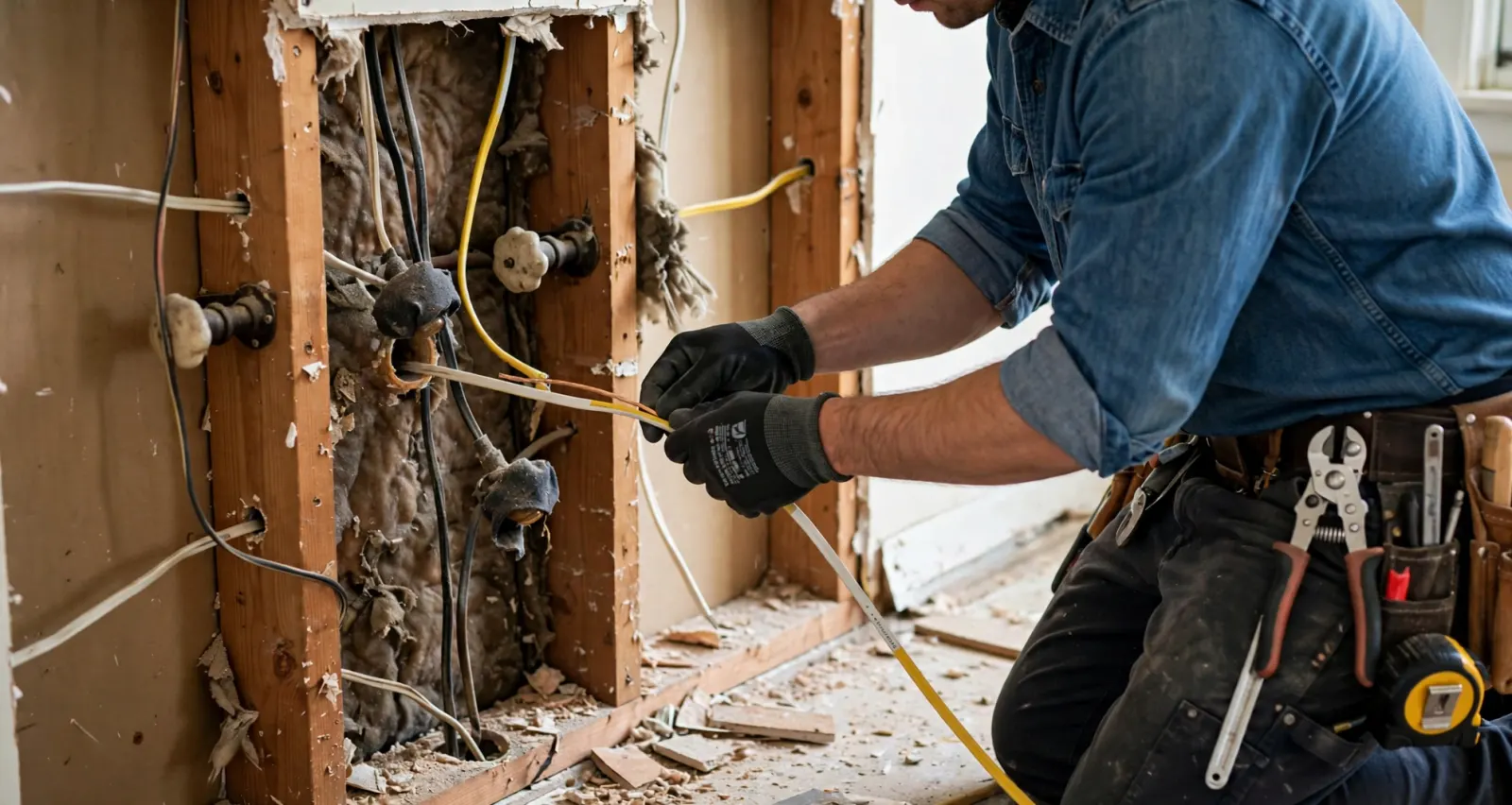
Stamford's older neighborhoods, including Glenbrook, Springdale, the West Side and the Cove, have many homes from the early 1900s with knob-and-tube, cloth wiring or circuits added over decades. Rewiring usually comes up during renovation, before insulating, or when an insurer asks.
- Call now to check electrician availability in your area
- Independent, licensed electricians
- Serving Shippan Point, Glenbrook, Springdale and more
What's different about home rewiring in Stamford
Basements and attics give the electrician routes for new cable. Multi-family homes near downtown are usually rewired unit by unit. Permits come from the City of Stamford's building department, Connecticut requires licensed electricians, and Eversource coordinates service changes. Ask for the rewire documented for insurers. Plan the work room by room.
Older homes may have knob-and-tube or small services, and multi-family houses near downtown often have several meters. Waterfront homes face flooding and salt air. Homes on wells in North Stamford need backup power for the pump during outages.
Weather and the utility in Stamford
Stamford's winters bring snow, ice and nor'easters, and summers bring thunderstorms and occasional tropical storms. Hurricane Sandy in 2012 flooded parts of Shippan Point and the Cove, and Tropical Storm Isaias in 2020 left a large share of Eversource customers in Connecticut without power for days. Eversource serves Stamford and handles meters, service drops and reconnection.
- Permits in Stamford
- Electrical permits come from the City of Stamford's building department. Connecticut licenses electricians through the Department of Consumer Protection.
- Electric utility
- Eversource
- Where we connect you
- 16 ZIP codes in Stamford, including Shippan Point, Glenbrook, Springdale, The Cove, North Stamford, Downtown Stamford
Signs it's time to call
- Knob-and-tube or cloth-insulated wiring
- Two-prong outlets throughout
- Aluminum branch wiring
- Frequent tripping or warm devices
- An insurer or home inspector flagged the wiring
How the job usually goes
1. Assessment
Wiring type, condition and circuit layout are documented.
2. Plan and permit
Circuits are prioritized and the work is permitted.
3. Rewire
New cable is fished through walls and ceilings with minimal openings.
4. Inspection and patching
Rough-in and final inspections, then wall openings are closed.
Full details on home rewiring, including what you can safely check yourself.
What moves the price in Stamford
Electricians set their own prices. Local permit fees, utility coordination and the age of the home all play a part, along with:
- Home size and number of circuits
- Access through attic, basement or crawl space
- Plaster versus drywall
- Whether the panel is upgraded at the same time
- Patching and painting scope
Stop and call an electrician if
- ✕ Do not cover knob-and-tube with insulation
- ✕ Do not splice new wire onto old wiring
Home Rewiring in Stamford: questions
Do I need a permit for home rewiring in Stamford?
In most cases, yes. Electrical permits come from the City of Stamford's building department. Connecticut licenses electricians through the Department of Consumer Protection. The electrician normally pulls the permit and arranges the inspection.
Do I have to rewire the whole house at once?
No. Many homeowners rewire in phases, starting with kitchens, baths and bedrooms.
Is aluminum wiring dangerous?
Aluminum branch wiring can overheat at connections. Approved repairs (such as rated connectors) or replacement reduce the risk; an electrician can advise which fits.
What electrical issues are common in Stamford homes?
Electricians in Stamford most often see: storm outages from tropical storms and nor'easters; coastal flooding on Shippan Point and the Cove; old wiring in early-1900s homes.
More electrical help in Stamford
Home Rewiring in nearby cities
Need home rewiring in Stamford?
Call now and we connect you with a licensed electrician who serves your ZIP code.