
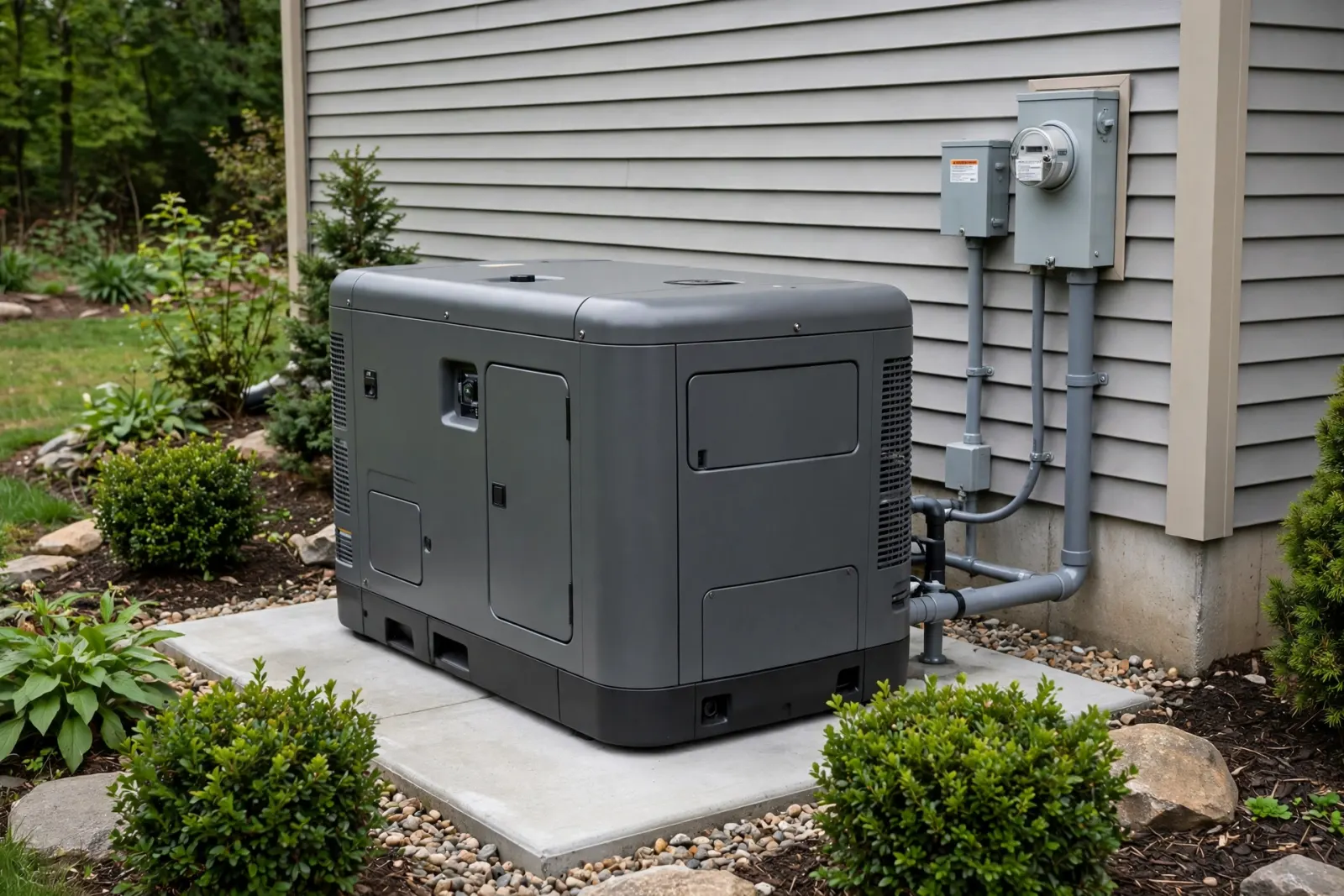
Standby Generator Installation · Charlotte, NC
Standby Generator Installation in Charlotte, NC
A standby generator is a permanently installed unit, usually fueled by natural gas or propane, that starts on its own when the power goes out and switches your home over through an automatic transfer switch.
- Call now to check electrician availability in your area
- Independent, licensed electricians
- Serving Plaza Midwood, Myers Park, South End and more
Why standby generator installation comes up in Charlotte
Ice storms in the Piedmont can coat Charlotte's tree canopy and bring down lines across the city, leaving some neighborhoods without power for days. A natural-gas standby generator with an automatic transfer switch is a popular choice for families who work from home or care for relatives, and Piedmont Natural Gas may need to upgrade the gas meter. Units must sit outdoors with clearance from windows, doors and property lines, and many HOAs in south Charlotte set screening rules.
Permits come from Mecklenburg County Code Enforcement. Ask whether the unit can carry the heat pump too.
- Standby generators with automatic transfer switches are popular in newer subdivisions where natural gas is available; check any HOA rules on placement and screening first.
- Permits in Charlotte
- Electrical permits in Charlotte and the rest of Mecklenburg County are issued by Mecklenburg County Code Enforcement.
- Electric utility
- Duke Energy
Signs to look for
- Outages that last a day or more in your area
- Medical equipment, sump pumps or home offices that cannot lose power
- No one home to set up a portable generator during storms
- Wanting central air or heat to run during outages
- Natural gas already at the home
How the work is done
1. Load and site review
The electrician decides which circuits to back up, sizes the unit, and picks a compliant spot outdoors.
2. Permits and fuel
Electrical and, often, gas or propane permits are pulled, and the fuel supply is checked for capacity.
3. Install unit and transfer switch
The pad, generator, automatic transfer switch and wiring are installed; a gas fitter connects the fuel.
4. Inspection and startup
The work is inspected, the unit is started, and the transfer is tested.
What moves the price in Charlotte
Electricians set their own prices. Older ranch homes often have 100 or 150 amp panels, sometimes Federal Pacific equipment.
- Generator size in kilowatts
- Whole-house versus essential-circuit transfer switch
- Distance from the panel and gas meter
- Gas meter or propane tank upgrades
- Pad, placement and HOA or flood-elevation requirements
- Permits and gas work
Standby Generator Installation in Charlotte: questions
Do I need a permit for standby generator installation in Charlotte?
Usually, yes. Electrical permits in Charlotte and the rest of Mecklenburg County are issued by Mecklenburg County Code Enforcement. The electrician normally pulls the permit and schedules the inspection.
Is the utility involved in Charlotte?
If the work affects the meter or service, the electrician coordinates with Duke Energy, which owns the meter and service drop.
What size standby generator do I need?
It depends on what you want to run. Essential circuits may need a smaller unit; whole-house backup with central air needs more. A load calculation decides.
Standby or portable generator?
A portable generator with an inlet and interlock costs less but has to be set up and refueled by hand. A standby unit starts and switches over by itself.
Can a standby generator run on propane?
Yes. Most run on natural gas or propane; the fuel supply must be sized for the unit.
How close to the house can it go?
Manufacturers and local codes set clearances from windows, doors, vents and property lines; the installer follows both.
Related help in Charlotte
Standby Generator Installation in other cities
Need standby generator installation in Charlotte?
Call now and we connect you with a licensed electrician who serves your ZIP code.