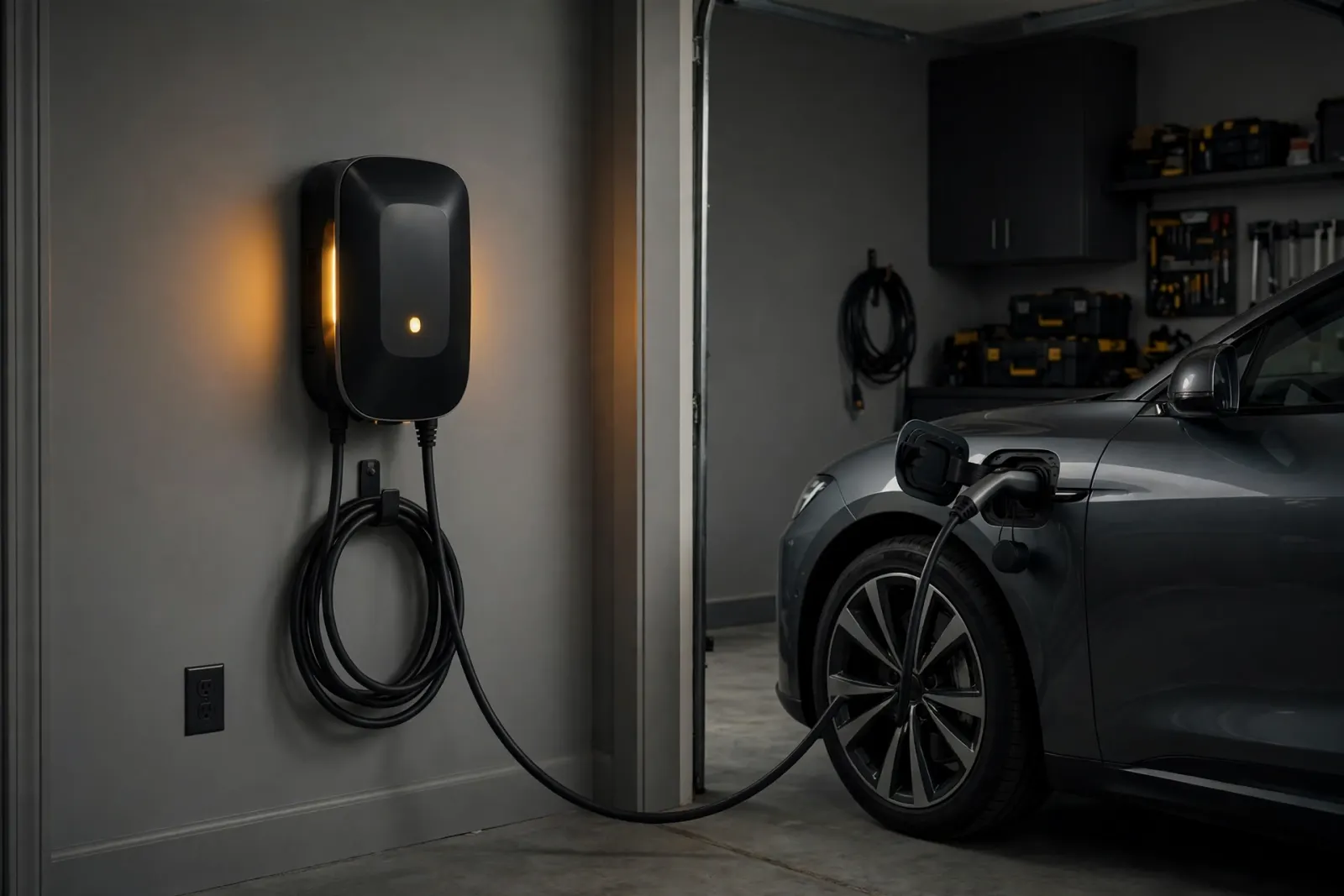
Long freeway commutes make home charging the norm for Tesla owners in Los Angeles, and most install a hardwired Wall Connector in the garage or carport. Valley ranch houses often have 100 amp panels already carrying central air and a pool pump, so a load calculation decides the current setting; Tesla's power-sharing feature helps when two cars share one circuit.
Electrification is the biggest driver of panel work in LA: heat pumps, induction cooking, EV chargers and rooftop solar often all land on a panel that dates to the original build. Fuse panels and Zinsco equipment are still found in older neighborhoods.
Teslas are everywhere in San Diego, and most owners install a hardwired Wall Connector in the garage. Clairemont and Mira Mesa tract homes often have 100 amp panels, so a load calculation decides the current setting, and pairing the charger with rooftop solar and time-of-use rates is common.
Rooftop solar is very common, and adding solar, a battery, an EV charger or a heat pump to an original 60 or 100 amp panel often requires an upgrade. Coastal homes see corrosion on outdoor equipment from salt air.
Sacramento's sprawling suburbs and long commutes make home charging the norm for Tesla owners, and many homes in Natomas, Elk Grove and the eastern suburbs have attached garages where a hardwired Wall Connector is simple. Older homes in Land Park and East Sacramento may have detached garages and smaller panels that need a load calculation.
Older homes often have 60 or 100 amp services, some knob-and-tube and limited outlets. Electrification is a big driver of work here, with heat pumps, EV chargers and rooftop solar all adding load to original panels.
Off-street parking is limited in San Francisco, so a Tesla Wall Connector usually goes in a tuck-under garage beneath a flat or in a shared building garage. In a shared garage, the charger has to be fed from the right unit's panel or a separate meter, and the homeowners' association or landlord typically has to agree.
Multi-unit buildings often have several small services and a meter bank. Electrification projects, including heat pumps, induction cooking and EV charging where there is a garage, usually start with a service and panel assessment.
Silicon Valley has one of the highest concentrations of Teslas anywhere, and many San Jose owners install a hardwired Wall Connector in the garage of a mid-century tract home. Those homes often have 100 amp panels, so a load calculation decides the current setting, and pairing the charger with rooftop solar and time-of-use rates is common.
Tract homes often have 100 amp services that cannot carry an EV charger, a heat pump and an induction range together. Eichlers, with post-and-beam construction, exposed ceilings and radiant floor heat, leave little hidden space to run new wiring.
Fresno's long drives across the valley make home charging valuable, and newer homes in north Fresno and Clovis usually have attached garages where a hardwired Tesla Wall Connector is simple. Older homes in the Tower District may have detached garages and smaller panels, so a load calculation decides the current setting.
Older homes often have 60 or 100 amp services that were sized before central air, and adding a larger AC system, rooftop solar or an EV charger frequently requires an upgrade. Rooftop solar is common across the city.
Long Beach homes in Los Altos and Lakewood Village usually have attached or detached garages where a hardwired Tesla Wall Connector fits well, while older homes in Belmont Heights and Bluff Park may have alley garages and smaller panels. A load calculation decides the current setting, and Tesla's power-sharing feature helps with two cars.
Many older homes still have 60 or 100 amp services, and adding an EV charger, heat pump or solar often needs an upgrade. Homes near the water see corrosion on meters, outdoor panels and exterior outlets.
Detached garages behind craftsman homes in Rockridge, Temescal and Glenview are a common spot for a Tesla Wall Connector in Oakland, which often means a trenched or overhead feed from the house. Hill homes face wildfire-season power shutoffs, so some owners plan the charger alongside a home battery.
Older flatland homes often have knob-and-tube and small services, while hill homes face wildfire-season power shutoffs. Heat pumps, induction cooking and EV chargers often require a service upgrade.
Many Stockton residents commute toward the Bay Area over the Altamont Pass, and a Tesla charged overnight at home makes that drive simpler. Newer homes in Spanos Park and north Stockton usually have attached garages and larger panels, so a hardwired Wall Connector is straightforward; older homes near downtown may need a load calculation and a lower current setting.
Older homes near downtown may have knob-and-tube or small services, while mid-century tracts often have panels electricians suggest replacing. Heat drives heavy AC loads, and rooftop solar is common.
Most Anaheim tract homes have an attached two-car garage, which makes a hardwired Tesla Wall Connector one of the simpler EV projects in Orange County. The limit is usually the panel: a 100 amp service already carrying central air, a dryer and sometimes a pool pump may only support a lower charging current, and Tesla's power-sharing feature helps households with two cars on one circuit.
Many tract homes have original panels and wiring now 60 or more years old, and some have aluminum branch wiring. Owners adding solar, batteries, heat pumps and EV chargers often need more capacity.
Many Pasadena bungalows have detached garages at the back of narrow lots, so a hardwired Tesla Wall Connector often means a long run from the panel and sometimes a trench. Older homes may have 60 or 100 amp services, so a load calculation decides the current setting, and Tesla's power-sharing feature helps with two cars.
Many homes have original or patched wiring and small services. Electrification projects and rebuilding after the fire both bring panel and service upgrades.