
Tesla Wall Connector Installation · San Francisco, CA
Tesla Wall Connector Installation in San Francisco, CA
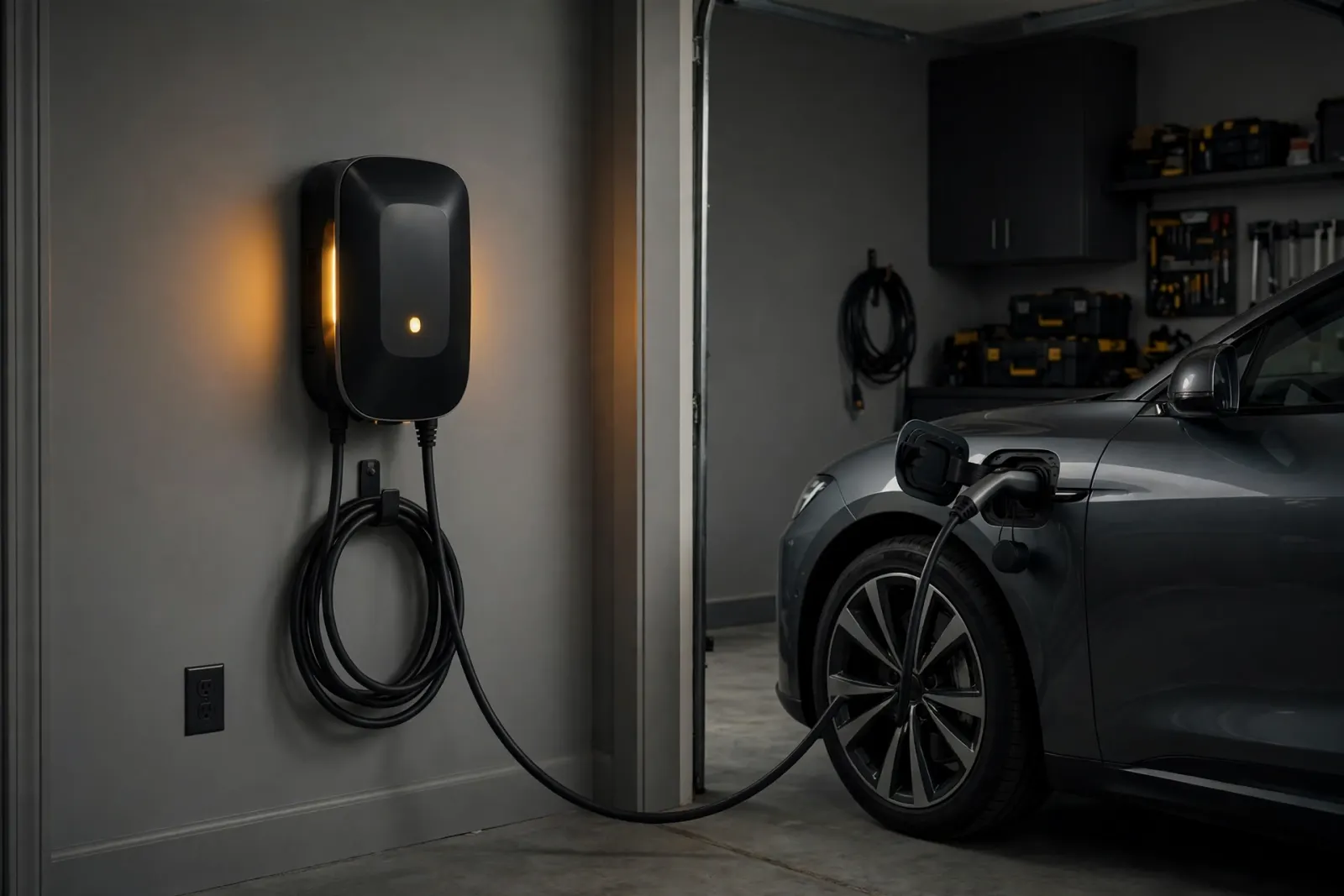
A Tesla Wall Connector is a hardwired Level 2 charger that can deliver up to 48 amps on a 60 amp circuit. Installation means confirming panel capacity, running a dedicated circuit to the garage or driveway, and pulling a permit.
- Call now to check electrician availability in your area
- Independent, licensed electricians
- Serving Mission, Sunset, Richmond and more
Why tesla wall connector installation comes up in San Francisco
Off-street parking is limited in San Francisco, so a Tesla Wall Connector usually goes in a tuck-under garage beneath a flat or in a shared building garage. In a shared garage, the charger has to be fed from the right unit's panel or a separate meter, and the homeowners' association or landlord typically has to agree. Older flats often have small services, which makes Tesla's adjustable current setting useful.
PG&E handles any meter or service work, and its scheduling can take weeks. Permits come from the Department of Building Inspection.
- Permits in San Francisco
- Electrical permits in San Francisco are issued by the Department of Building Inspection (DBI), and work must be done by a California-licensed electrical contractor.
- Electric utility
- PG&E (lines and meters); CleanPowerSF for most customers' supply
Signs to look for
- Buying or leasing a Tesla
- Slow charging on a standard 120-volt outlet
- A second EV that needs to share capacity
- Planning a charger in a detached garage
- An existing 240-volt outlet you want to replace with a hardwired unit
How the work is done
1. Load calculation
The electrician confirms the panel can carry the charging circuit and chooses the amperage.
2. Plan placement
The unit is placed where the cable reaches the charge port without crossing walkways.
3. Run the circuit
A dedicated circuit is run and the Wall Connector is mounted and configured.
4. Commission and inspect
The charger's current limit is set to match the breaker, and the work is inspected.
What moves the price in San Francisco
Electricians set their own prices. Multi-unit buildings often have several small services and a meter bank.
- Distance from the panel to the charger
- Panel capacity and any upgrade
- Garage versus outdoor mounting
- Trenching to a detached garage
- Permit fees
Tesla Wall Connector Installation in San Francisco: questions
Do I need a permit for tesla wall connector installation in San Francisco?
Usually, yes. Electrical permits in San Francisco are issued by the Department of Building Inspection (DBI), and work must be done by a California-licensed electrical contractor. The electrician normally pulls the permit and schedules the inspection.
Is the utility involved in San Francisco?
If the work affects the meter or service, the electrician coordinates with PG&E (lines and meters); CleanPowerSF for most customers' supply, which owns the meter and service drop.
What breaker does a Tesla Wall Connector need?
Up to a 60 amp breaker for the maximum 48 amp output; smaller breakers are allowed with a lower current setting.
Can I use a NEMA 14-50 outlet instead?
Yes, with Tesla's mobile connector, but output is lower than a hardwired Wall Connector at full power.
Can two Wall Connectors share one circuit?
They can share power across units through Tesla's power-sharing feature, which helps homes with limited capacity.
Does a Wall Connector work with other EVs?
Newer versions with the J1772 connector work with most EVs; the NACS version needs an adapter for some vehicles.
Related help in San Francisco
Tesla Wall Connector Installation in other cities
Need tesla wall connector installation in San Francisco?
Call now and we connect you with a licensed electrician who serves your ZIP code.