
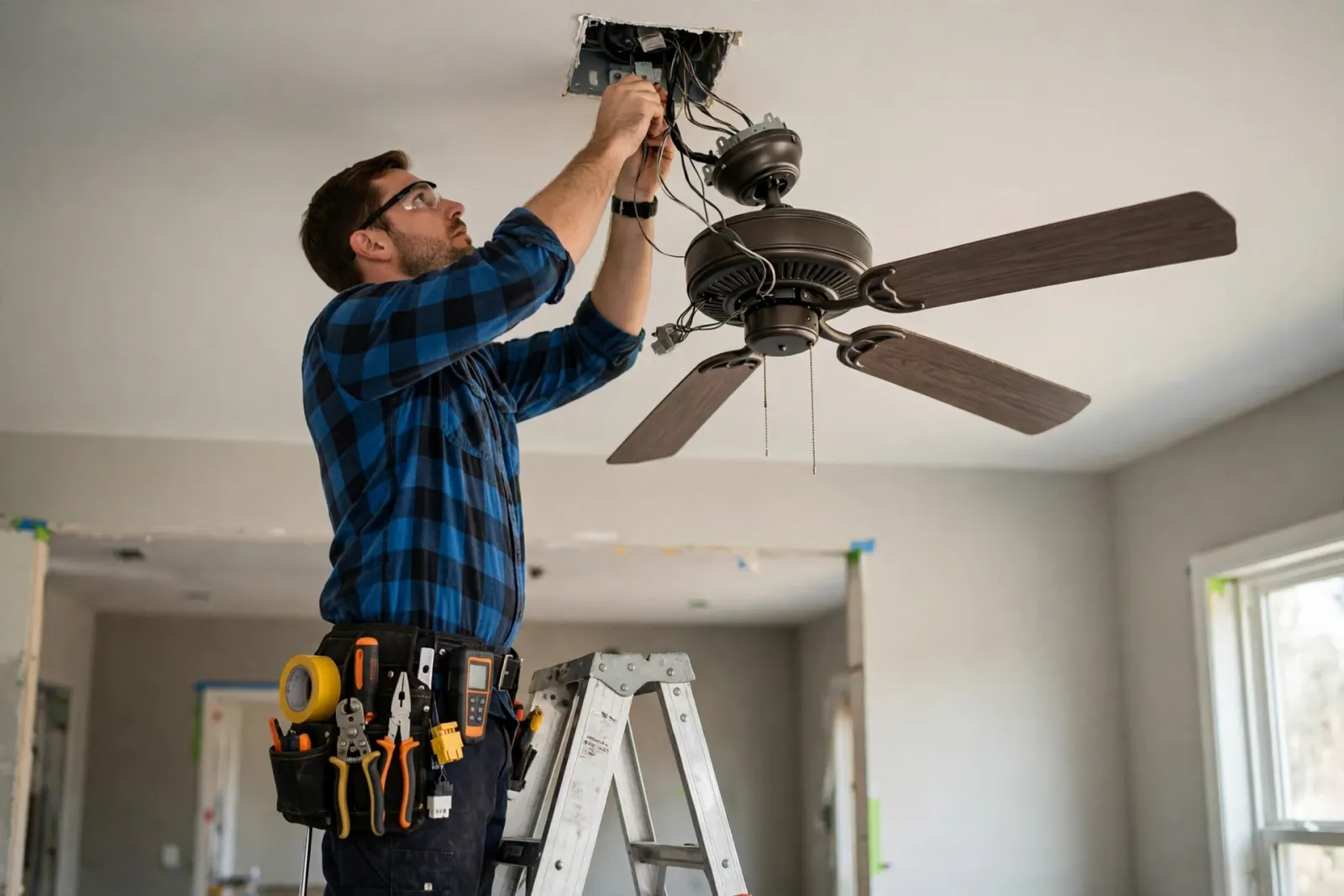
Installation
Ceiling fan installation
A ceiling fan must hang from a fan-rated box fastened to the framing, not a standard light box. Replacing a light with a fan is often a short job; adding separate switches for the fan and light may need an extra conductor.
- Call now to check electrician availability in your area
- Licensed, independent electricians
- 47 states + DC
About ceiling fan installation
A fan moves and wobbles in a way a light fixture never does. That is why the code requires a box listed for fan support. If the existing box is not rated, the electrician installs a fan brace between the joists.
Separate control of fan and light is either done with a remote or by running a three-conductor cable to the switch box.
- Ceiling Fan Installation at a glance
- Installation
- Who does the work
- An independent licensed electrician
- Urgent calls
- Usually scheduled
- Typical first step
- Check the box
Signs you need this
- Replacing a light with a fan
- A fan that wobbles or hums
- Wanting separate fan and light switches
- Installing a fan on a vaulted ceiling
What the electrician does
- 1
Check the box
The box is checked for a fan rating; a brace is installed if needed.
- 2
Mount and wire
The fan is assembled, mounted and balanced.
- 3
Controls
Wall controls or remote are set up and tested.
What affects the cost
Electricians set their own prices. These are the factors that move a quote up or down, so you can compare like for like.
- Whether a fan brace is needed
- Ceiling height
- New wiring for separate switches
- Number of fans
What you can do safely, and when to stop
Safe to do
- ✓ Check the fan's downrod length for your ceiling height
Stop and call
- ✕ Do not hang a fan from a box not rated for fans
Key terms
- Fan-rated box
- An electrical box listed to support the weight and motion of a ceiling fan.
- Downrod
- The pipe between the ceiling mount and the fan motor; longer downrods lower the fan on tall ceilings.
- Damp-rated
- Listed for covered outdoor areas exposed to moisture but not direct rain.
Ceiling Fan Installation FAQ
Can I put a ceiling fan where a light was?
Usually, if a fan-rated box or brace is installed. The electrician checks the box first.
Can a ceiling fan go where a light fixture is now?
Often, but the existing box must be rated for fan support. Standard light boxes are not designed for the weight and movement of a fan and must be replaced with a fan-rated box or brace.
Can I control the fan and light separately?
Yes, with a second wire run from the switch or with a remote or smart control. An electrician can tell you what your existing wiring allows.
How high should a ceiling fan be?
Blades should be at least 7 feet above the floor. Downrods help on high ceilings, and low-profile fans suit ceilings under about 8 feet.
Why does my ceiling fan wobble?
Usually unbalanced blades, loose blade screws or a loose mounting bracket. A wobble from a box that is not fan-rated is a safety issue.
Can a fan be installed on a sloped ceiling?
Yes, with a fan and mount rated for the slope angle, and usually a longer downrod so the blades clear the ceiling.
Do outdoor patios need a special fan?
Yes. Covered porches need a damp-rated fan, and areas exposed to rain need a wet-rated fan.
How long does a ceiling fan installation take?
Replacing a fixture with a fan on a fan-rated box is often done in an hour or two. Adding a box, brace or new switch wiring takes longer.
Where electricians offer this
Available through our network in 47 states and DC. Metro guides:
Related services

Lighting Installation
Electricians install recessed lights, replace fixtures, add switches and dimmers, and run outdoor and landscape lighting.
Learn more →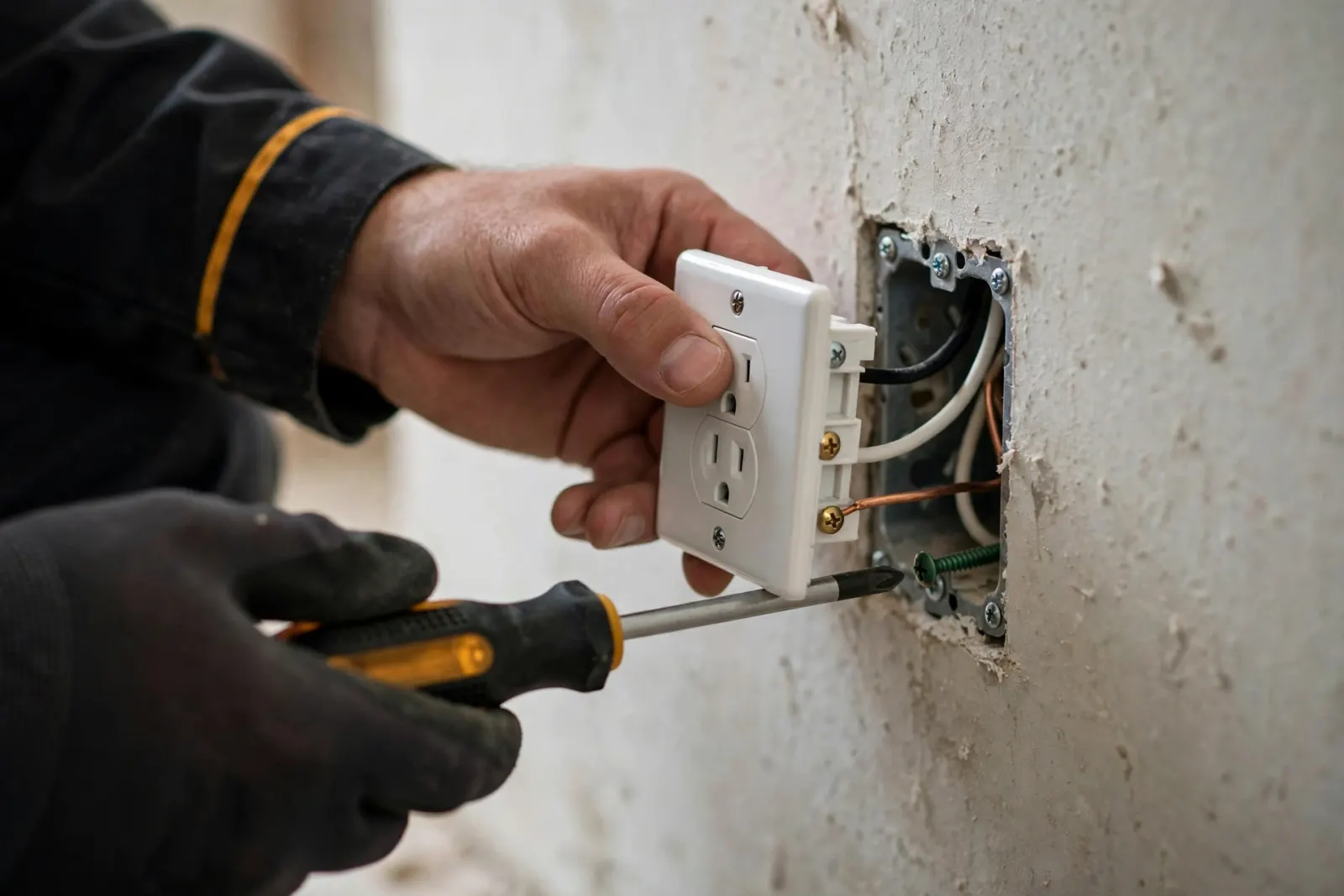
Outlet & Switch Repair
Replace any outlet that is loose, cracked, scorched or warm, and any switch that crackles or feels hot.
Learn more →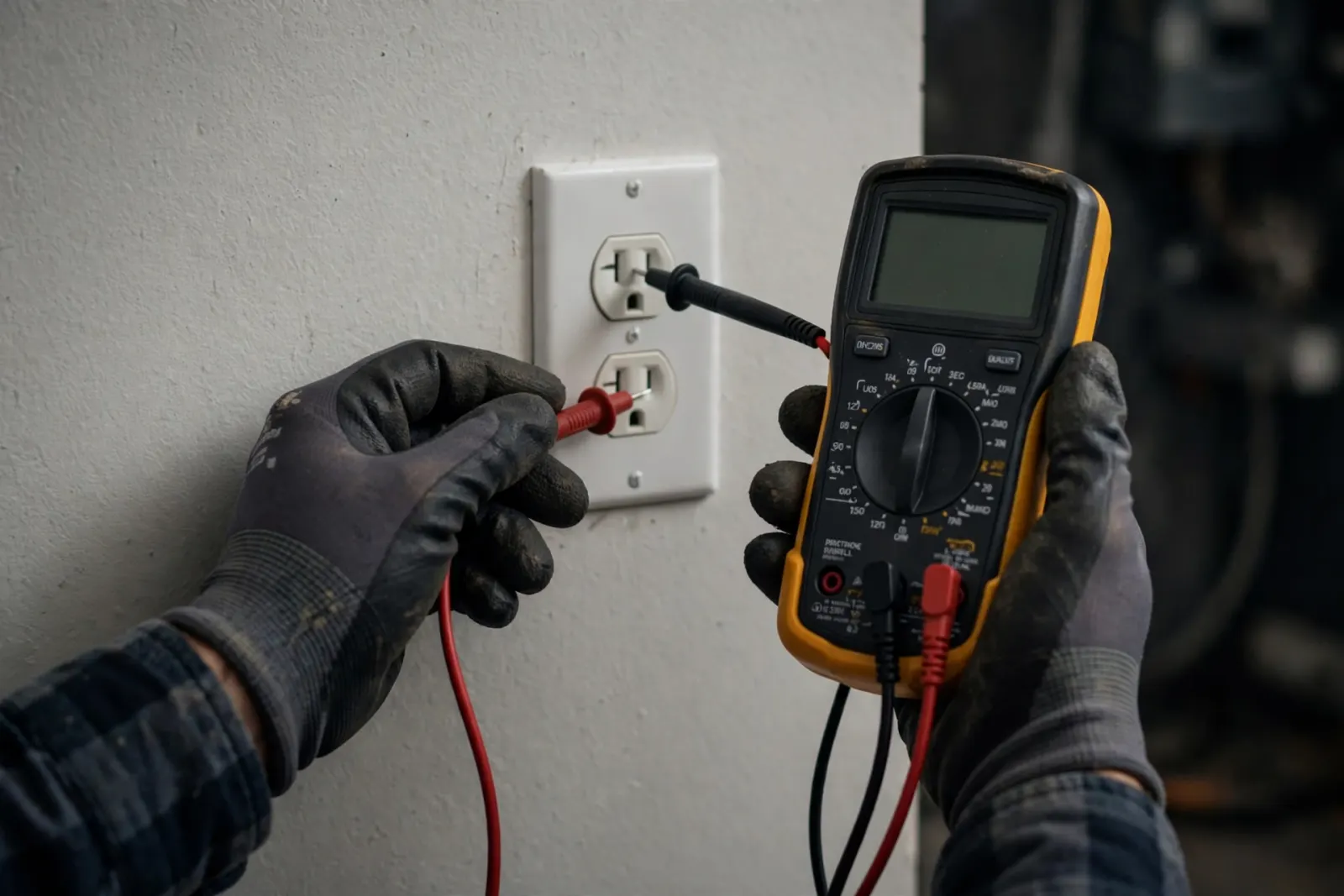
Electrical Repair & Troubleshooting
Dead outlets, flickering lights and tripping breakers usually come from a loose connection, a failed device, an overloaded circuit or a tripped GFCI somewhere upstream.
Learn more →Need help with ceiling fan installation?
Call now, or send a request and a licensed electrician who serves your ZIP code will contact you.