Installation
EV charger installation
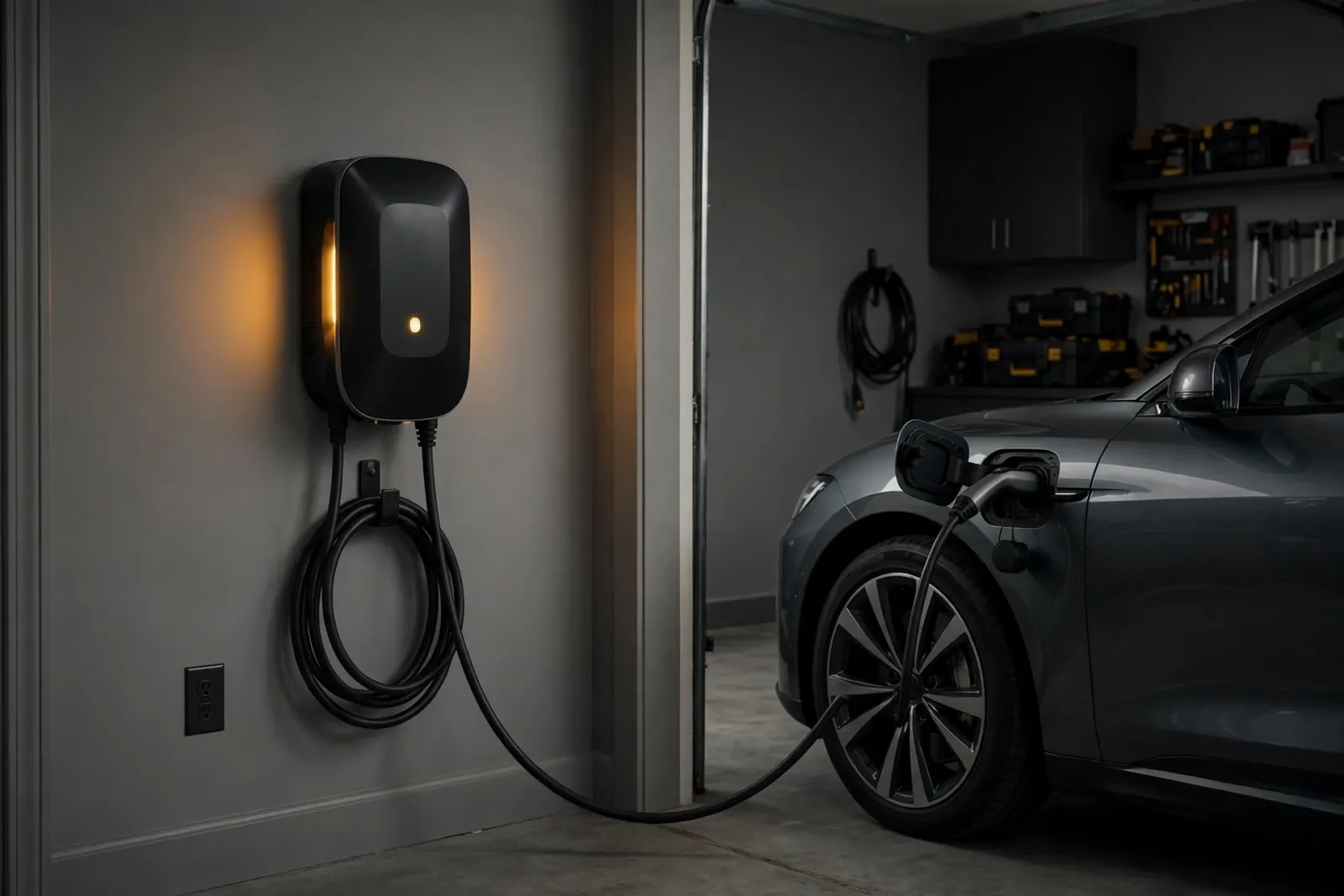
A Level 2 home charger needs a 240 volt circuit, usually 40 to 60 amps, run from your panel to the garage or driveway. The electrician checks whether your service can carry the load, pulls the permit and installs either a hardwired charger or a NEMA 14-50 outlet.
- Call now to check electrician availability in your area
- Licensed, independent electricians
- 47 states + DC
About ev charger installation
Level 1 charging from a regular outlet adds only a few miles of range per hour. A Level 2 charger can refill most daily driving overnight. The main question is capacity: a 100 amp service with an electric range and dryer may need load management or a panel upgrade first.
Hardwired chargers are generally preferred for higher-amperage charging, and the current code requires GFCI protection for many garage and outdoor receptacles. Ask about utility rebates, which often require a licensed installer and a permit.
- EV Charger Installation at a glance
- Installation
- Who does the work
- An independent licensed electrician
- Urgent calls
- Usually scheduled
- Typical first step
- Site and load check
Signs you need this
- You bought or ordered an EV
- Charging from a regular outlet is too slow
- Two EVs in one household
- A new garage or driveway parking spot
What the electrician does
- 1
Site and load check
Panel capacity, distance and mounting location are confirmed.
- 2
Permit
The installation is permitted; rebates may require the permit number.
- 3
Install
The 240V circuit and charger or receptacle are installed and tested.
- 4
Inspection
The local inspector signs off.
What affects the cost
Electricians set their own prices. These are the factors that move a quote up or down, so you can compare like for like.
- Charger amperage
- Distance from panel to charger
- Indoor versus outdoor or detached garage
- Whether a panel upgrade or load management device is needed
- Permit fees and available rebates
What you can do safely, and when to stop
Safe to do
- ✓ Check your panel's main breaker size
- ✓ Decide where you park and where the cable will reach
Stop and call
- ✕ Do not charge from an extension cord
- ✕ Do not install a 240V outlet yourself
Key terms
- EVSE
- Electric vehicle supply equipment: the wall-mounted charger and cable.
- NEMA 14-50
- A 50 amp, 240-volt outlet commonly used for plug-in EV chargers.
- 125% rule
- The NEC requirement to size circuits for continuous loads, such as EV charging, at 125% of the load.
EV Charger Installation FAQ
Do I need a panel upgrade for an EV charger?
Not always. A load calculation shows whether the existing service can carry the charger; load management devices can avoid an upgrade in some homes.
Hardwired or plug-in charger?
Hardwired is often preferred for higher amperage and outdoor locations. A plug-in charger on a NEMA 14-50 outlet is easier to replace.
What is the difference between Level 1 and Level 2 charging?
Level 1 uses a standard 120-volt outlet and adds only a few miles of range per hour. Level 2 uses a 240-volt circuit and can typically recharge most EVs overnight.
What size circuit does an EV charger need?
EV charging is a continuous load, so the NEC sizes the circuit at 125% of the charger's output: a 40 amp charger needs a 50 amp circuit, and a 48 amp charger needs a 60 amp circuit.
Hardwired charger or plug-in?
A plug-in charger uses a NEMA 14-50 outlet and can be unplugged and moved. A hardwired charger can often deliver more power and avoids outlet wear. The NEC requires GFCI protection for many EV outlets, which affects plug-in setups.
Can an EV charger be installed outdoors?
Yes, with a charger and outlet rated for outdoor use, weatherproof covers and wiring suited to wet locations. Placement should keep the cable off walkways and the unit away from sprinkler spray where possible.
How long does an EV charger installation take?
Often a few hours to a day when the panel is near the garage. Long runs, detached garages and panel upgrades take longer.
Does an EV charger need a permit?
In most places, yes, because it adds a new 240-volt circuit. The electrician normally pulls it.
Are there rebates for home EV chargers?
Many utilities and some states offer rebates or EV rate plans, and the terms change often. Check your utility's current programs before you buy the charger.
Where electricians offer this
Local guides to ev charger installation, with permit offices, housing and utility notes for each city:
- EV Charger Installation in Huntsville, AL →
- EV Charger Installation in Phoenix, AZ →
- EV Charger Installation in Los Angeles, CA →
- EV Charger Installation in San Diego, CA →
- EV Charger Installation in Sacramento, CA →
- EV Charger Installation in San Jose, CA →
- EV Charger Installation in Fresno, CA →
- EV Charger Installation in Bakersfield, CA →
- EV Charger Installation in Long Beach, CA →
- EV Charger Installation in Denver, CO →
- EV Charger Installation in Colorado Springs, CO →
- EV Charger Installation in Washington, DC →
- EV Charger Installation in Boise, ID →
- EV Charger Installation in Chicago, IL →
- EV Charger Installation in Las Vegas, NV →
- EV Charger Installation in Reno, NV →
- EV Charger Installation in Charlotte, NC →
- EV Charger Installation in Austin, TX →
Available through our network in 47 states and DC. Metro guides:
Related services
Electrical Panel Upgrade
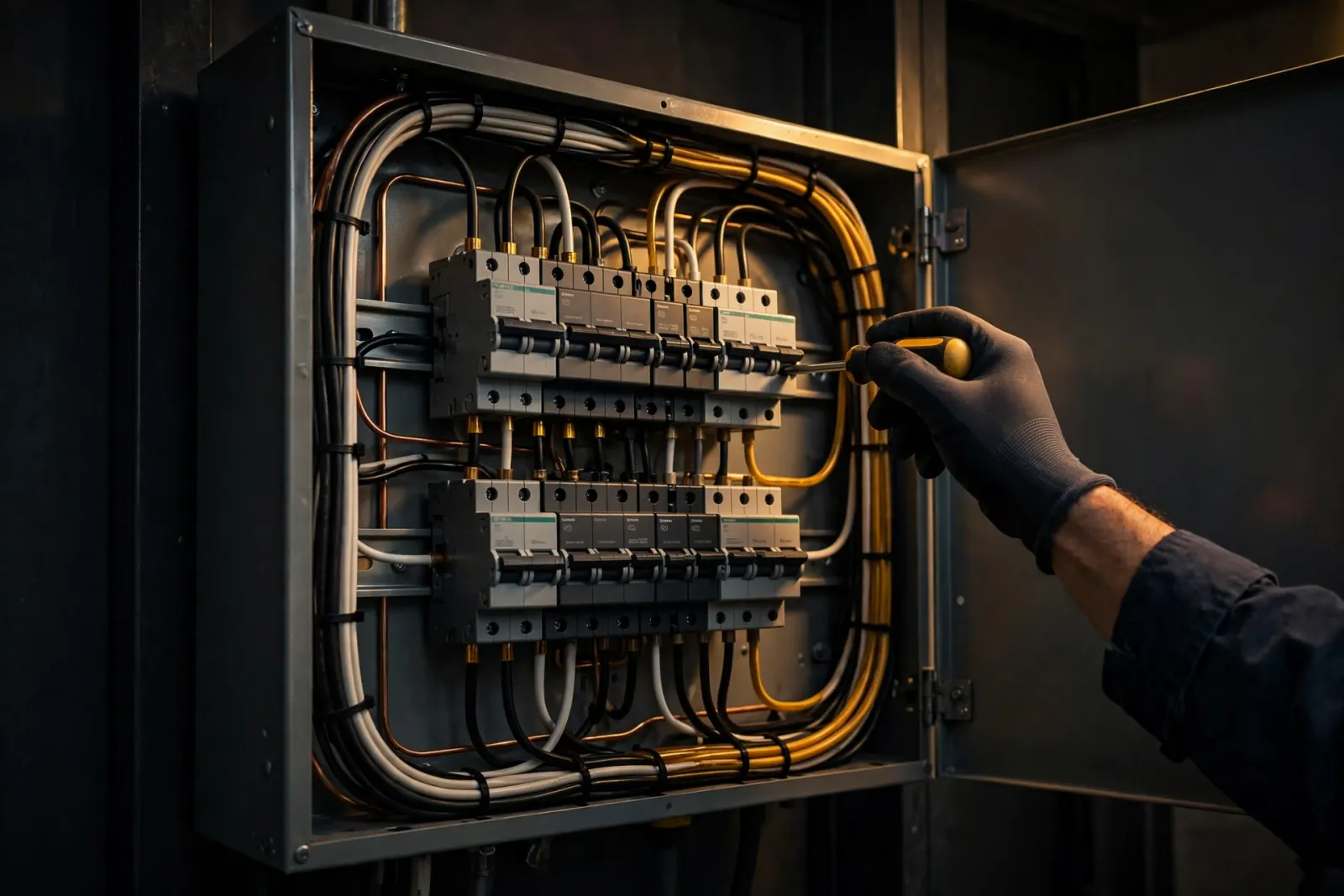
A panel upgrade replaces your breaker panel, and often the service entrance, so the home can safely carry more load: an EV charger, heat pump, induction range or addition.
Learn more →
Dedicated Circuits
A dedicated circuit serves one appliance or one heavy-use area so it does not share capacity with anything else.
Learn more →
Whole-Home Surge Protection
A whole-home surge protective device (SPD) mounts at the panel and limits voltage spikes before they reach your circuits.
Learn more →Need help with ev charger installation?
Call now, or send a request and a licensed electrician who serves your ZIP code will contact you.