
Installation
Installing an EV Charger at Home: What to Know
Updated
Short answer
Most EV owners install a Level 2 charger on a 240 volt circuit, typically 40 to 60 amps. Before buying a charger, have an electrician check your panel capacity and the distance from the panel to where you park.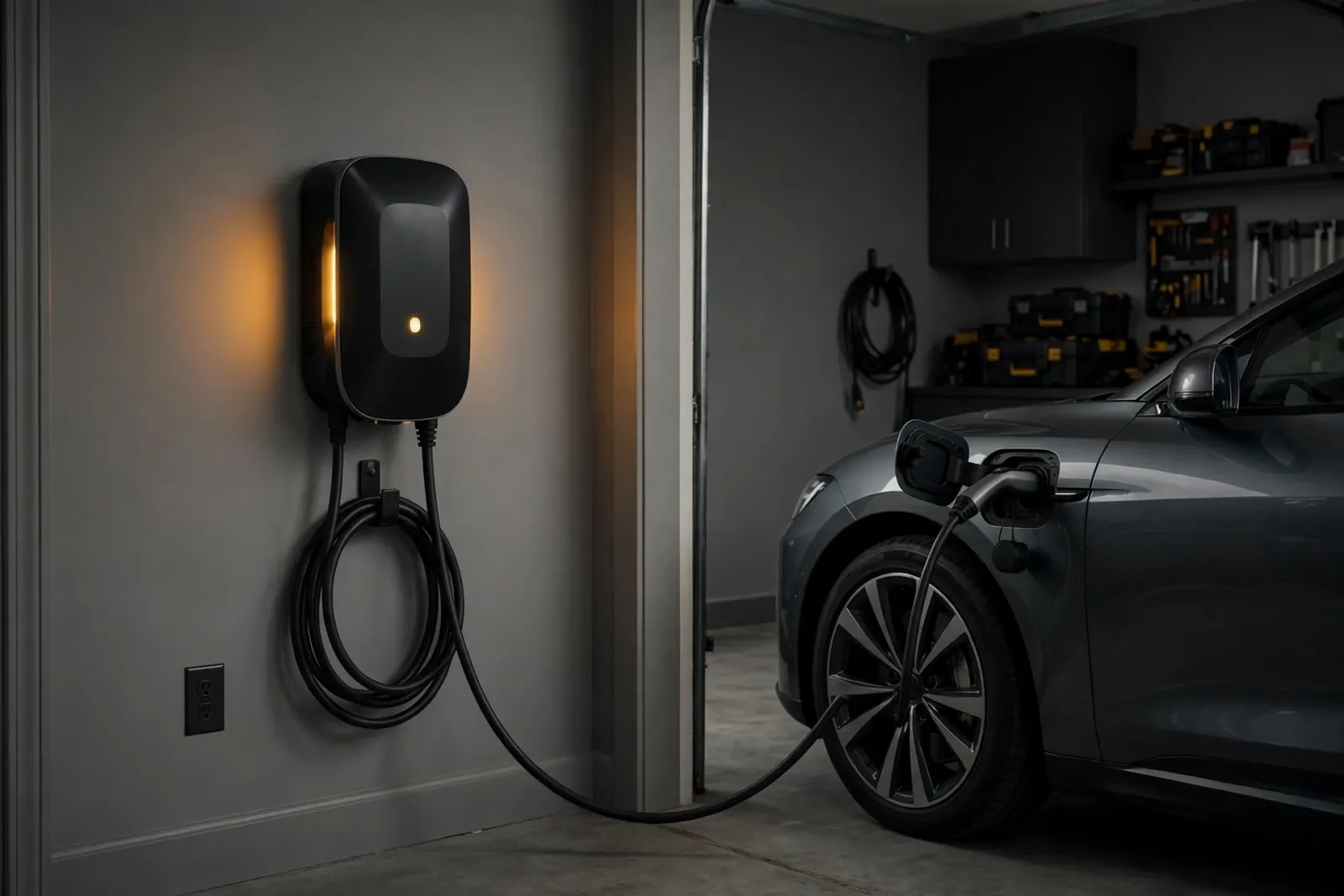
Level 1 vs Level 2
Level 1 uses a regular outlet and adds a few miles of range per hour. Level 2 can recharge most daily driving overnight.
Panel capacity
A load calculation shows whether your service can carry the charger. Load-management devices can sometimes avoid a panel upgrade.
Hardwired or plug-in
Hardwired chargers are often preferred for higher amperage and outdoor locations; NEMA 14-50 outlets make the charger easier to replace.
Permits and rebates
Utility rebates often require a licensed installer and a permit, so keep the paperwork.
- Ask your utility about EV rates
- Keep the permit number
- Save the installer invoice
When to call an electrician
If anything is warm, smells hot, sparks or keeps failing after the simple checks above, stop and call. The electrician will test the circuit, find the cause and make it safe. Related service: EV Charger Installation.
Questions
How long does installation take?
A straightforward garage install is usually a few hours; longer runs or panel work take more.
Local help with ev charger installation
City guides with local permit offices, utilities and housing notes:
Editorial note: this guide is general information for US homes, not a substitute for an on-site assessment by a licensed electrician. Codes and permit rules vary by location.